A friend of mine once told me she avoided gyms—not because she didn't want to exercise, but because walking in felt like stepping into someone else's world.
Machines she didn't understand, music too loud, people too fast. "It's like showing up late to a class I never signed up for," she said. And that stuck with me.
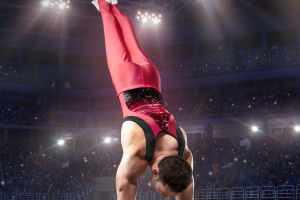
As the 2025 Special Olympics World Winter Games get ready to kick off in Turin, the spotlight is on athletes who've pushed past every label and barrier to show what movement can look like—on their own terms.
What if the rest of us took that same spirit and built something smaller, closer, and more personal? Not a performance. Not a grind. Just one low-pressure, high-compassion "movement day" that welcomes everyone.
Here's how to start.
Rethink what counts as "exercise"
Forget the treadmill for a second. Movement isn't just sweat or reps—it's presence. It's permission. For some people, it starts with stretching on the floor. For others, it's a dance in the kitchen, a slow walk around the block, or five minutes of gentle resistance bands.
Instead of setting rules like "work out for 30 minutes," try inviting movement with open-ended prompts:
• "Want to do something that gets us breathing deeper?"
• "Let's try one thing that makes our body feel more awake."
• "Move how you want, I'll follow your lead for 2 minutes."
You're not hosting a bootcamp. You're opening a door.
Set up a space that says "yes"
You don't need a gym to make movement inviting. Just a space that feels safe, adjustable, and open to all energy levels.
Try this:
• Clear a living room corner or backyard spot
• Add soft surfaces like Mobility work mats or pillows
• Keep a box of "choose your own tools": foam rollers, tennis balls, sliders, light resistance bands
Even lighting matters. Bright and loud can be overstimulating—try soft lamps or natural light. Music optional. And if silence is better, respect that too. The goal is simple: no pressure, no hierarchy, just space to start.
Use the "unified sport" mindset at home
Special Olympics has a concept called Unified Sports, where people with and without intellectual disabilities play together on the same team. It's not about ability. It's about connection.
You can use this idea in your own home or group:
• Pair a movement lover with someone just getting started for a slow-ball toss game
• Let each person design one activity that everyone tries
It removes the idea of "coaching" or "fixing." No one's the expert. Everyone brings something to the game.
Make it more about mood than metrics
After your movement time, skip the usual "How many reps did you do?" or "How many calories did that burn?"
Instead, ask things like:
• "Did anything feel surprisingly good?"
• "Which part helped your brain the most?"
• "What would you try again next time?"
Celebrate things like:
• Better sleep
• Less stress
• More connection
• A moment of calm
When movement feels emotionally safe, people show up again. Not because they have to—but because something inside says, That felt right.
Your "Accessible Movement Day" could look like this
A Saturday morning with music at a whisper. One person is stretching quietly. Another trying chair sport from a video. A kid rolling a ball across the floor while their sibling stacks blocks between squats.
You're not training.
You're gathering.
You're saying, "This space is yours too."
Final thought before you press play
Big events like the Special Olympics show what happens when barriers fall. But they also remind us: inclusivity doesn't have to be grand.
It can be a mat on the floor. A playlist that feels like home. A friend who asks, "Wanna move a little?"
You don't have to be a coach. You just have to care.
Start where you are, with who you have. Let everyone move their way. That's where the real wins begin.